 Reindeer Sledding Tromso Norway
What to Wear for Reindeer Sledding in Tromsø
Wondering what to wear for reindeer sledding in Tromsø? For reindeer sledding in Tromsø you need a woollen or synthetic base layer, a warm mid layer, winter boots, gloves, a hat and a scarf, and several of the camps lend the outer gear on top. That is the whole list in one sentence. The reason it matters is that sledding is a sitting-still activity in serious cold. You sit on a sled while a reindeer walks at a calm pace, usually for 10 to 30 minutes, and the rest of the trip is standing around a feeding fence or sitting in a heated tent. Average winter lows in Tromsø sit near -10°C (14°F), and the inland camps can run colder than the harbour front. The good news is that every listing on reindeer sledding in Tromsø compared states its own clothing rules, and most camps hand you a thermal suit or overalls so the expensive outer layer is not your problem. This guide walks through each layer, what the camps lend, and what goes on your own list.
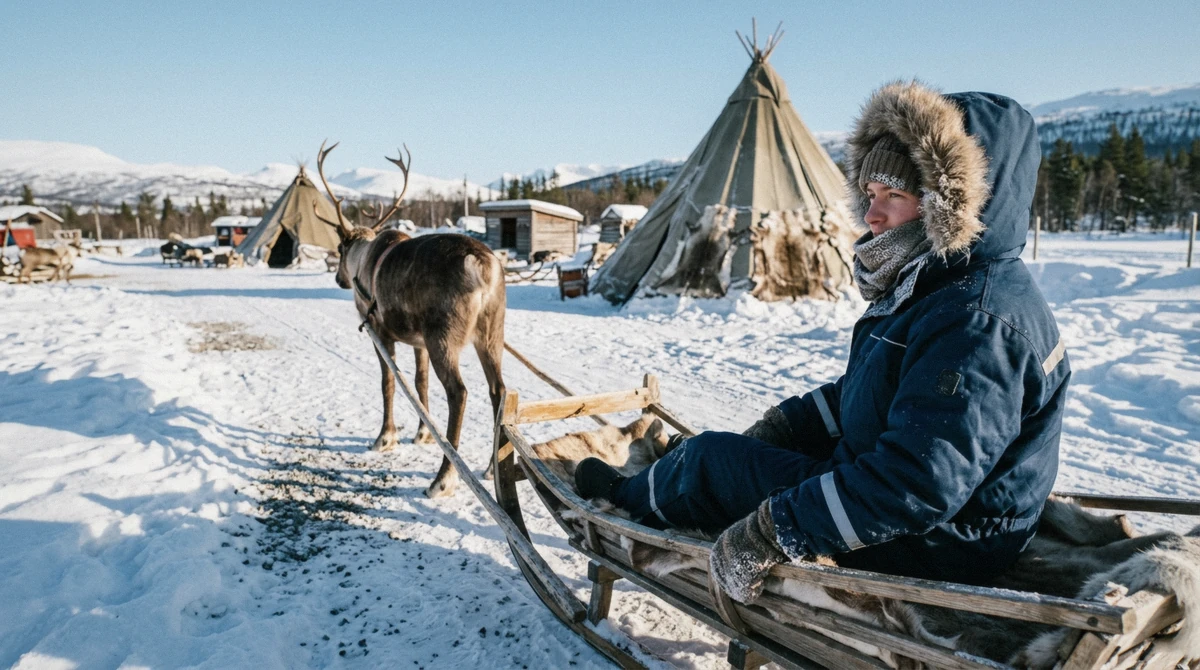
Illustrative image of a rider dressed for the cold.
Quick answer Base layer, mid layer, boots and gloves on you, most camps lend the outer suit
Wear a woollen or synthetic base layer, a fleece or woollen mid layer, winter boots, insulated gloves, a hat and a scarf. Several camps lend warm overalls, snowsuits, boots or boot covers, so you do not need to buy an Arctic parka for one trip. Avoid cotton jeans and cotton hoodies because they stay damp and cold. Evening trips end with standing outside after dinner looking for the northern lights, so bring an extra layer for that stretch. If you book the snowmobile combination day, a woollen base layer and woollen socks are listed as a must.
Key takeaways
- Most camps hand out outer gear: Camp Tamok includes a thermal suit, boots, mittens and a hat, and the Lyngen Alps day tour gives snowsuits and boot covers.
- On your own list: two warm layers, gloves, a hat, a scarf and good winter boots, which every single listing asks for.
- Do not wear cotton jeans, they hold moisture and will make you cold on the sled.
- Tromsø averages about -5°C (23°F) as a January afternoon high and -10°C (14°F) as the night low, and inland camps sit colder.
- One pair of insulated winter boots with room for a spare sock covers the whole day, from bus to sled to lavvu.
Quick packing decisions
If You already own ski base layers and a decent parka
Bring both and treat the camp's loaner suit as a bonus top layer on the coldest days, as on the Long Reindeer Sledding and Sami Culture Tour from Tromsø.
If You are travelling light with hand luggage only
Book a trip that includes clothes outright, such as the cheapest sled-or-feed camp, and pack only base layers, gloves, a hat and a scarf.
If You booked an evening trip with a northern lights chance
Add one extra mid layer and a spare pair of socks, because the Night Reindeer Sledding, Sami Dinner and Chance of Northern Lights listing tells you to dress warm for standing outside after dinner.
If Your trip combines sledding with snowmobiling
Pack a woollen base layer and woollen socks as a must, plus your passport for the border crossing.
If You are going with young children
Pack spare mittens and a spare hat per child, and see what the camps supply for small sizes in the with-kids guide.
What to wear: the layer system for sitting still
Reindeer sledding punishes underdressing in a way walking tours do not. You are mostly still. The sled ride itself is a seated position with cold air moving past, feeding the herd means standing at a fence with bare hands in the wind, and the warm part of the trip happens indoors in a lavvu or gamme.
Dress for the coldest stationary stretch of the day, not for the bus ride out. Every listing in the catalog asks for at least two warm layers, gloves, a hat, a scarf and good winter boots, so treat that as the non-negotiable floor and build upward.
Base layer
The layer against your skin should be merino wool or a synthetic thermal, never cotton. Wool keeps insulating even when it is slightly damp, which matters because the bus is heated and you will warm up indoors in the tent. Long johns plus a long-sleeved top is the standard.
One listing in the catalog, the snowmobile combination day, states outright that a woollen base layer and woollen socks are a must, and that logic applies to every sled ride. Bring a clean dry base layer for the next day rather than re-wearing a damp one.
Mid layer
A fleece jacket or a thick woollen sweater over the base layer does the real insulating work while you sit. If you run cold, add a light down or synthetic insulated jacket as a second mid layer, it packs small and earns its space the moment you stop moving at the feeding fence. Trousers should be thermal-lined ski pants or softshell winter pants over the base layer long johns.
Cotton jeans are the single most common packing mistake on this kind of trip, they hold sweat and snowmelt against your legs and lose all insulation value.
Outer layer
This is the layer most camps solve for you. The long and short trips from the seaside camp lend warm overalls and boots if required, the Lyngen Alps day tour provides a snowsuit and boot covers, and Camp Tamok hands out a thermal suit, winter boots, mittens and a hat, asking only that you bring a scarf. The cheapest sled-or-feed camp includes warm clothing as well.
If your chosen trip supplies the outer suit, wear your base and mid layers underneath and you are done. If it does not, as with the small-group Sami family camp at Nordkjosbotn which simply says wear and bring warm clothes, you need a windproof insulated parka and winter trousers of your own.
Feet and footwear
Insulated winter boots with a grippy sole are the only sensible choice, and every listing demands them. They should be roomy enough for a thicker sock without pinching, because squeezed toes get cold faster. Two thin woollen socks often beat one thick pair.
Leave trainers at the hotel, they have no insulation and smooth soles slide on packed snow at the camp. Sneakers, fashion boots with heels and anything with an open top that snow can enter are all wrong for this terrain. Camp Tamok and the Lyngen tours supply boots or boot covers, so your own boots only need to handle the bus and the lavvu floor.
Hands, head and face
Insulated gloves or mittens are on every bring list, and mittens are warmer for standing at the feeding fence. If you want to hand-feed reindeer and take photos, a thin glove liner under a mitten lets you do both. A wool hat that covers the ears is standard, and Camp Tamok supplies one if you forget.
The scarf is the item camps ask you to bring even when they lend everything else, it fills the gap between hat and collar on the sled. In polar night twilight or on evening trips, a buff over the face tames the wind chill on the ride.
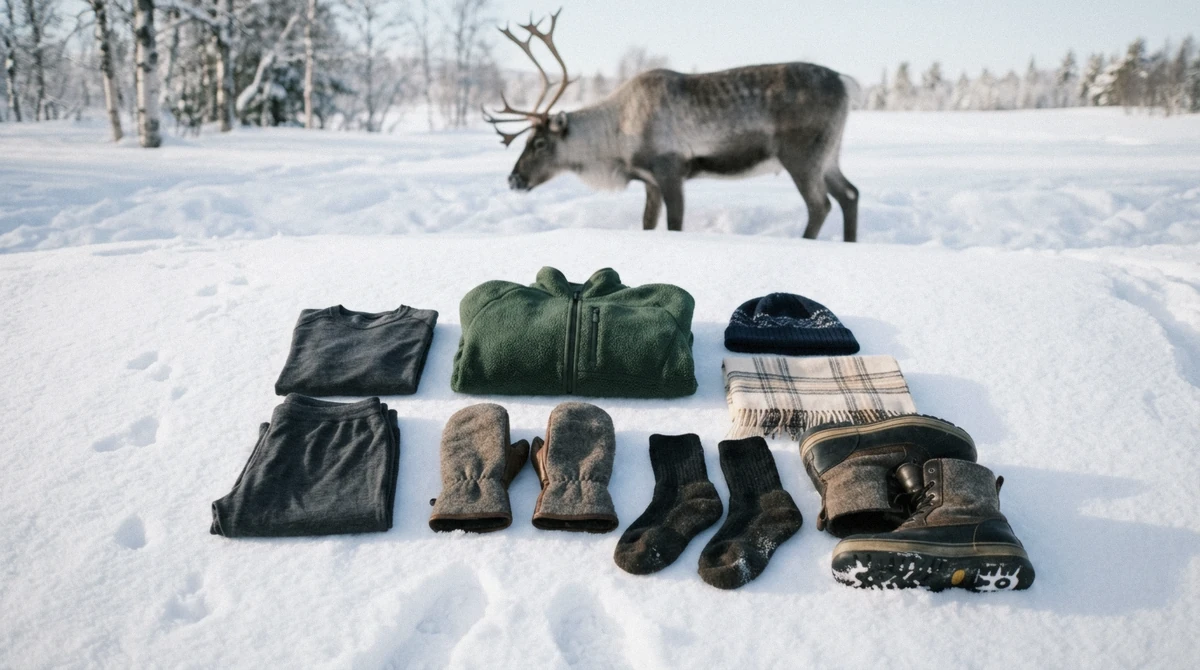
Illustrative image of a layered winter kit.
Fabric and colour guide
Fabric choice matters more than fashion at -10°C (14°F), and colour barely matters at all for reindeer, which are calm around people at these camps. The table below sorts the common options. The rows on cotton and wool carry the most weight for this trip.
| Item | Good for sledding? | Why |
|---|---|---|
| Merino wool base layer | Yes, best choice | Insulates when damp and does not smell after a long day |
| Synthetic thermal base layer | Yes | Quick drying and cheap, a fair second to wool |
| Cotton hoodie or t-shirt | No | Absorbs sweat and snowmelt and stays wet and cold against your skin |
| Cotton jeans | No | No insulation when damp, stiff on the sled, slow to dry |
| Fleece mid layer | Yes | Light, warm and easy to peel off inside the lavvu |
| Woollen sweater | Yes | Warm even if damp, packs reasonably well |
| Bright colours | Fine | No downside here, they help your group spot each other in blue twilight |
| Dark colours | Fine | Practical for evening trips, scuffs and reindeer slobber show less |
White looks smart for about ten minutes at a reindeer camp. Between the snow, the mud at the feeding fence and the reindeer themselves, choose clothes you are happy to sit on the ground in.
What to bring: the packing checklist
- Woollen or synthetic base layer, top and bottoms, for warmth that survives damp
- Fleece or woollen mid layer, for sitting still on the sled
- Insulated winter boots, required by every listing
- Insulated gloves or mittens, for the feeding fence
- Wool hat, plus a spare if you have small children
- Scarf or buff, the one item Camp Tamok asks you to bring even with its loaner kit
- Thick woollen socks, with a spare pair in your day pack
- Passport, only for the snowmobile and sledding combination to the three-country border
- Small day pack, to stash a spare layer in the heated tent
- Hand warmers, cheap comfort for standing outside after dinner
- Spare socks for the ride home, wet feet end the day early
Phones and cameras in the cold
Cold does two things to electronics: it drains batteries faster and it fogs lenses when you move between the cold outdoors and the warm lavvu. Keep your phone in an inside pocket close to your body until you need it, and carry a power bank in the same warm pocket rather than in a cold backpack. When you come indoors, leave the phone in the bag for a few minutes so condensation forms on the bag, not on the lens.
Several trips solve the photo problem for you, the sled-or-feed camp includes photos from a professional photographer and the evening bidos dinner trip includes professional photos, so you can leave your own camera in your pocket and enjoy the stew. For the rest, a phone in a warm pocket with a charged battery is genuinely enough, the sled moves at walking pace and the light at midday in February is a soft blue that phones handle well.
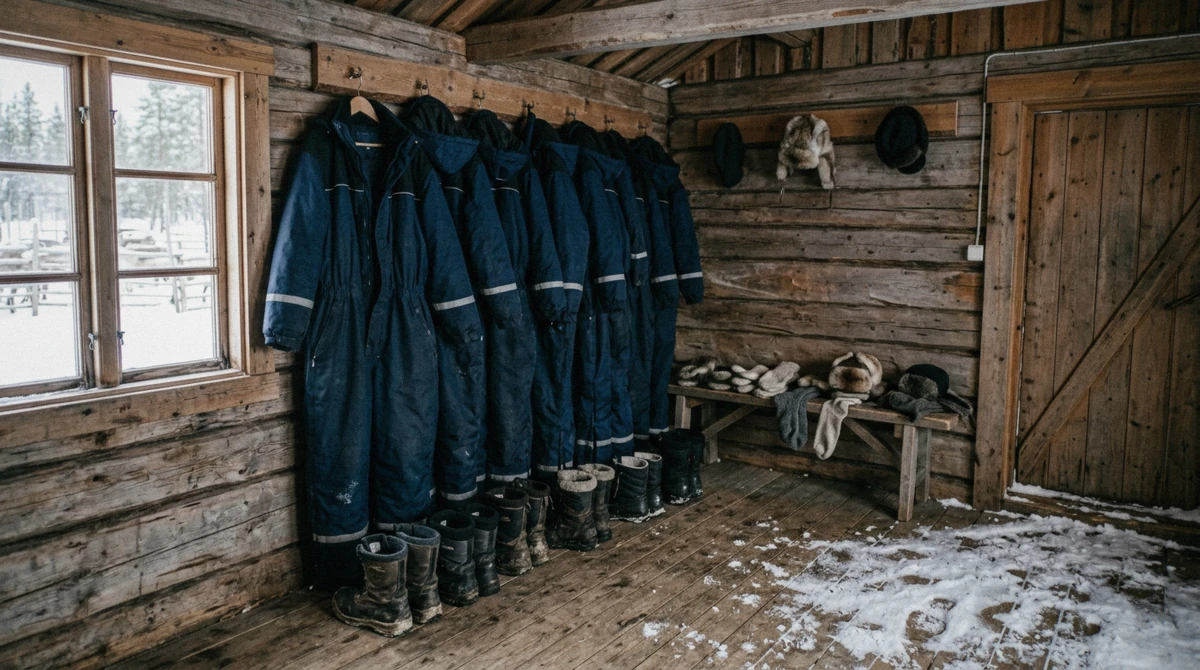
Illustrative image of lent winter gear.
What the camps lend you, so you do not overpack
This is where an independent catalog earns its keep. Clothing inclusions differ between the trips compared here, and the difference can save you buying an Arctic parka for one evening. The table pulls the stated weather and clothing notes from each listing, with prices from the same catalog.
| Item | Usually provided | Bring your own | Notes |
|---|---|---|---|
| Thermal suit or overalls | Several camps | Base and mid layers | The long and short trips from the seaside camp lend warm overalls and boots if required, and Camp Tamok includes a thermal suit in its $220 fare |
| Winter boots | Often | Thick socks | The Lyngen Alps day tour provides boot covers with its snowsuit, Camp Tamok supplies winter boots |
| Mittens and hat | Sometimes | A scarf | Camp Tamok provides mittens and a hat, and still asks you to bring a scarf, the only gap in its kit |
| Snowsuit | One camp | Base layers | The $233 Lyngen Alps listing states snowsuit and boot covers provided |
| Warm clothing at the cheapest fare | Yes | Dress for outdoors | The $113 sled-or-feed camp includes warm clothing and asks you to dress for outdoor activities |
| Nothing extra | Your own parka | Full kit | The Nordkjosbotn Sami family camp and the $336 snowmobile combination simply say wear and bring warm clothes, the snowmobile day adds a woollen base layer and woollen socks as a must |
| Passport | Never | Always for one trip | The three-country border day needs it because the route ends at the border with Finland and Sweden |
Two practical notes on that table. First, loaner suits are shared between guests, so your own clean base and mid layers are what actually sit against your skin all day. Second, check the listing before you pack, since some camps lend a full suit and others lend nothing.
The full cost spread and ride lengths sit in the comparison of Reindeer Sledding Tromso Norway if you want to weigh gear against price.
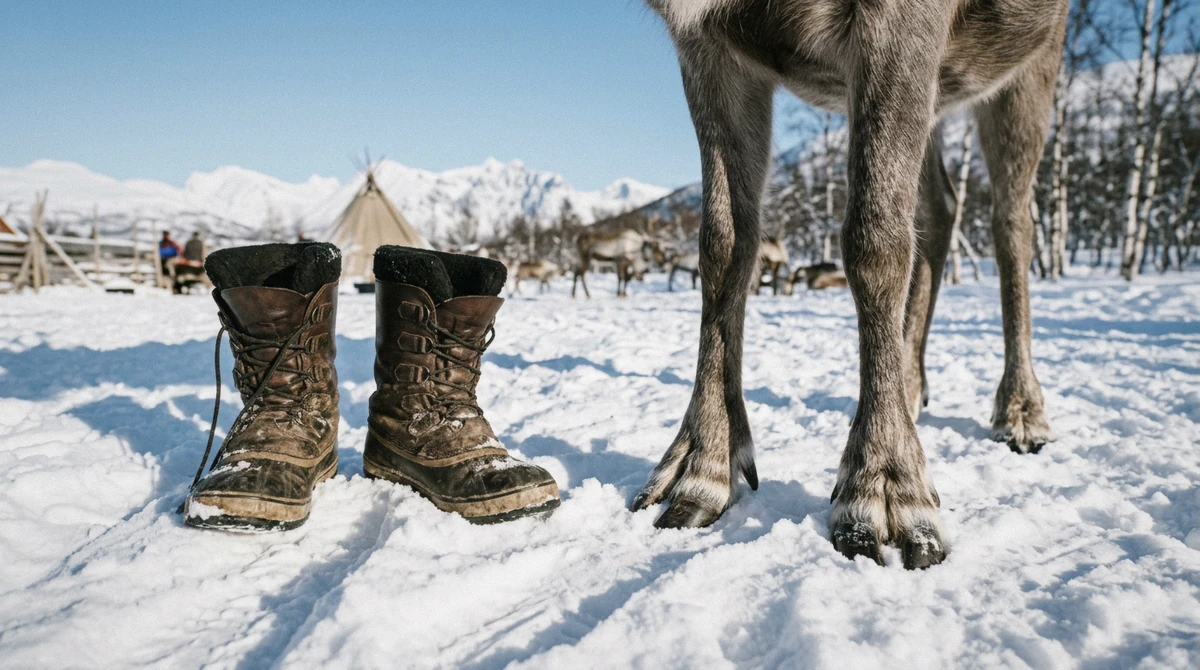
Illustrative image of winter boots at the camp.
What not to wear or bring
- Cotton jeans, they hold moisture and freeze stiff on the sled
- Cotton hoodies as a base layer, same problem at skin level
- Trainers or fashion boots, no insulation and smooth soles slide on ice
- Heeled boots of any kind, the camps are snow and packed ice
- One thin pair of fashion gloves, the feeding fence needs real insulation
- A heavy parka you cannot compress, when the camp already lends a thermal suit you will cook on the bus
- Jewellery you would mind losing in snow, rings also get cold against your fingers
- More than one bag, space on the bus and in the gamme is modest
Nothing in the listings bans jewellery or extra bags outright, so treat that part as common-sense advice rather than a rule. The firm, stated items are the fabric ones: every listing wants warm layers, gloves, a hat, a scarf and winter boots, and the snowmobile combination names wool as a must. If you are deciding between bringing and leaving something, the lavvu or gamme at most camps means you always have a warm place to store a spare layer, so err on the side of one extra mid layer rather than one extra gadget.
Packing by season
The sledding season runs roughly from November to early April, and the kit shifts more than you would expect across it. The figures below are average highs and lows for the Tromsø area from long-term climate data, and the inland camps usually sit a few degrees colder than these city numbers.
| Season | Temperatures | Wear this |
|---|---|---|
| December to mid January | Highs about -4 to -5°C (25 to 23°F), lows about -9 to -10°C (16 to 13°F), polar night | Full stack: woollen base, two mid layers, camp loaner suit on top, mittens, buff, two pairs of socks, hand warmers for the after-dinner dark |
| Late January to February | Highs about -5°C (23°F), lows about -10°C (14°F), about 7.5 hours of daylight by mid February | Same as deep winter, plus sunglasses for the low sun on snow in the afternoon |
| March | Highs about -2°C (28°F), lows about -7°C (19°F), about 11.5 hours of daylight | One mid layer is usually enough under the loaner suit, sunglasses earn their place, still keep the buff for wind |
| November and early April | Highs about -1 to 2°C (30 to 36°F), wetter snow possible | Waterproof outer matters more than sheer insulation, spare socks become the hero item, snow can be thin enough that rides are shortened |
November deserves one warning. Snow cover is building, and several listings state that sledding needs good snow and can be shortened or replaced with a partial refund when it is thin, so pack for slush as much as for cold. For the month-by-month detail on snow and light, see the guide to the best time for reindeer sledding in Tromsø.
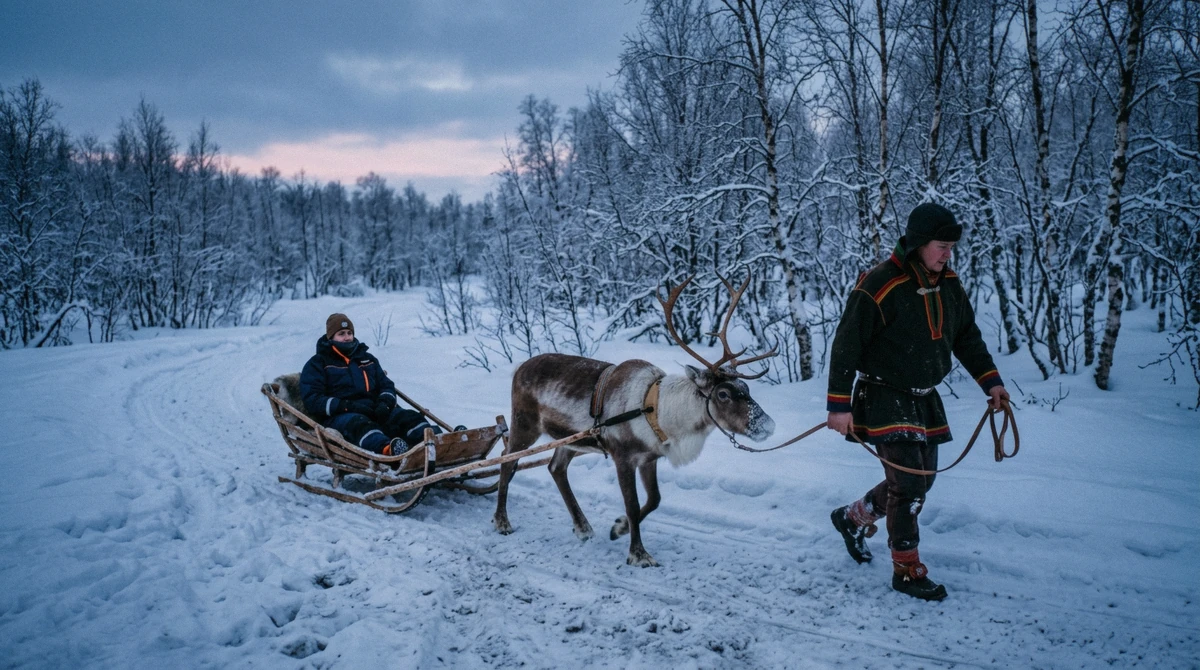
Illustrative image of a sled ride in the cold.
Evening trips: dressing for after dinner
The fix is one extra layer that lives in your day pack until after dessert. A spare fleece, a second pair of socks swapped on in the tent, and hand warmers opened at that moment rather than on the sled. The same advice applies to the Reindeer Sledding with a Chance of Northern Lights and Bidos Dinner evening trip from Ramfjordbotn, where the weight limit for the sled ride is 100 kg (220 lb) and the aurora is again a chance rather than a promise.
Head out warm and the waiting is pleasant, head out already chilled and you will be back inside before the sky does anything interesting.
Kids and spare everything
Children get cold faster than adults because they are smaller, they fidget at fences and they rarely mention the first warning signs. Pack a complete spare set for each child: mittens, hat and socks as the minimum, because wet mittens end feeding time early. The long trip from the seaside camp accepts infants from 0 to 2 and asks you to bring your own baby seat for the bus, so the clothing question for toddlers is your own layers plus the camp overalls.
Camp Tamok and the Nordkjosbotn family camp are not suitable for children under 4, which trims the options with the smallest ones. For a fuller run through ages, ride lengths and which camps welcome prams, see the guide to reindeer sledding in Tromsø with kids.
Is it worth buying gear for one trip
Usually no, and that is the honest headline of this whole guide. Between the loaner suits at most camps and regular outdoor shops in Tromsø if you truly lack something, nobody needs a full Arctic wardrobe for a 4-hour trip. Spend your money on the two things that touch your skin and make or break the day, a merino base layer set and proper winter boots, and borrow or rent the rest.
If you are still weighing whether the trip itself suits you, the honest rundown at is reindeer sledding in Tromsø worth it covers the ride lengths and group sizes behind these clothing notes, and the Sámi culture guide explains what happens inside the warm tent where you will spend most of the day anyway.
Questions and Answers
What should I wear for reindeer sledding?
A woollen or synthetic base layer, a fleece or woollen mid layer, insulated winter boots, gloves, a hat and a scarf. Every listing in the catalog asks for at least those items, and most camps add a loaner thermal suit or overalls on top. Avoid cotton jeans and cotton hoodies.
Do reindeer camps provide warm clothing?
Most do, in some form. The long and short trips from the seaside camp lend warm overalls and boots if required, the Lyngen Alps tours provide snowsuits and boot covers, Camp Tamok provides a thermal suit, boots, mittens and a hat, and the cheapest sled-or-feed camp includes warm clothing. The Nordkjosbotn family camp is the exception, it simply asks you to wear and bring warm clothes.
How cold is it in Tromsø in winter?
Long-term averages put January afternoons at about -5°C (23°F) with nights near -10°C (14°F), and February is similar. December averages about -4°C (25°F) for a high. The inland camps can run colder than the city, so dress for the low figure rather than the high.
Do I need snow boots for reindeer sledding?
Yes, insulated winter boots with a grippy sole are required by every listing. They should fit a thick sock without pinching your toes. Some camps supply boots or boot covers with their loaner kit, but your own boots still need to handle snow at the meeting point and around the camp.
What should I bring on a reindeer sledding tour?
Your base and mid layers, gloves, a hat, a scarf, thick socks with a spare pair and a small day pack. Add a passport if you book the snowmobile and sledding combination to the three-country border, and hand warmers if you chose an evening trip with time outside after dinner.
What not to wear in Tromsø in winter?
Skip cotton next to your skin and cotton jeans as trousers, because both stay damp and cold. Leave trainers, heeled boots and thin fashion gloves at the hotel, they fail on snow and ice. For a city dinner out in December or January, the same boots and parka you wore sledding are entirely normal dress.